Women at Bletchley: A Wren's Story and a Researcher's Reflection
DateTuesday 24 February 2026
Time12:00-13:00
LocationThe Hub
CostFree
Join us for a special discussion to hear two very different stories about the Women of Bletchley Park – a personal account and a researcher’s perspective.
Sir Dermot Turing is the award-winning author of X, Y and Z – the real story of how Enigma was broken and Enigma Traitors, which reveals the failings of Allied cipher security during World War II. He will share insights from his latest book, Misread signals, which highlights the crucial, often overlooked roles of women at Bletchley Park.
We are also honoured to welcome Mary Stewart, who will tell us about her experiences serving as a bombe operator in the Women’s Royal Naval Service (WRNS) during the Second World War. The Wrens, as they were known then, were the female branch of the British Royal Navy, formed initially in 1917 (WWI) and reformed in 1939 (WWII) to release men for sea service by filling crucial land-based roles like clerks, drivers, wireless operators, and codebreakers, serving globally and integrating into the Navy until officially disbanding in 1993 as women joined the Navy directly.
Tea, coffee and biscuits are provided immediately before the talk, from 11.30am.

Sir Dermot Turing
Sir Dermot Turing is a Visiting Fellow of Kellogg College, and the acclaimed author of Prof, a biography of his famous uncle, The Story of Computing, and most recently Misread Signals.
Mary Stewart was a Bombe operator during the War. Bombe machines were designed by Alan Turing and Gordon Welchman to break German Enigma codes. Operators were mostly women from the Women’s Royal Naval Service (Wrens), who worked shifts in a tedious but vital role that involved setting up the machines, identifying “stops,” and passing potential settings to codebreakers,
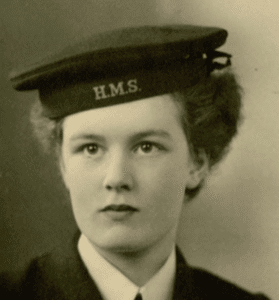
Mary Stewart
Bletchley Park Week:
This event is part of our annual Bletchley Park Week (22-27 February) programme of events celebrating a partnership between Kellogg College and Bletchley Park. This year’s theme is: “The Age of AI”.
Open to: General Public, Members of Kellogg College, Oxford University members,